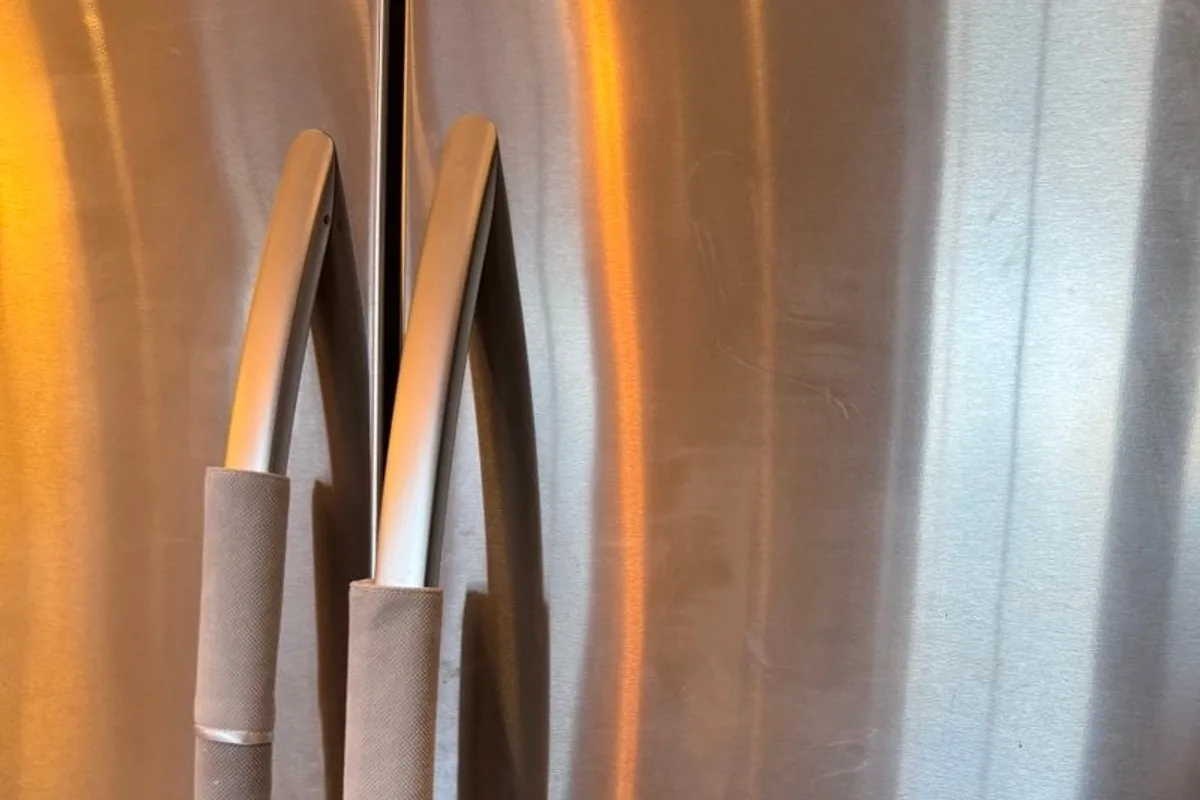
Warm water with a few drops of dish soap, a soft microfiber cloth wiped along the grain, a second damp cloth to take the soap off, and a dry cloth straight after. That cleans every kind of stainless steel appliance without streaks. What changes from one fridge to the next is everything people add after that: vinegar, glass cleaner, oil, stainless polish. Those are fine on some doors and forbidden on others, and the appliance makers draw the line by the finish on the metal, not by the brand of the fridge.
Three finishes that all get sold as stainless
Whirlpool's page on cleaning and caring for stainless steel surfaces opens with a question most owners have never been asked: which type of stainless finish does your appliance have? Each one, it says, needs a different cleaning method.
| Finish | What you see | What it is |
|---|---|---|
| Traditional (plain) stainless | Bare silver metal with fine brushed lines, fingerprints show quickly | The steel itself, with nothing on top |
| Fingerprint-resistant stainless | Silver metal that smudges less and looks slightly satin | Steel under a clear coat |
| Black stainless | Dark grey or black metal, brushed lines still visible | Steel under a tinted clear coat |
The two coated finishes are the reason so much online advice goes wrong. A cleaner that's harmless on bare steel can scratch, cloud or strip a coat that's only on the surface, and that kind of damage doesn't wipe off later.
How to find out which one you have
Black stainless is easy to spot by its colour. Telling plain stainless from a fingerprint-resistant door by eye is harder, so check before you try anything stronger than soap.
- Look in the owner's manual, if you still have it. The cleaning section usually names the finish.
- Find the model number. On a fridge it's on a label inside, often on a side wall or near the crisper drawers. On a range, look around the frame when the oven door or the storage drawer is open.
- Search that model number on the maker's own site. The product page normally lists the finish in its name or its specifications.
- Still not sure? Treat the door as coated. Soap and water suit all three finishes, so the careful choice costs you nothing.
Popular streak tips, checked against the makers
The tips below come up on almost every cleaning blog. The two right-hand columns say what the makers' own care pages allow, from Whirlpool, KitchenAid, GE and Bosch.
| Tip | Plain stainless | Fingerprint-resistant and black |
|---|---|---|
| Vinegar, or vinegar and water | Not in the plain steel instructions of Whirlpool, GE or Bosch, which ask for soap and water | No. Whirlpool and KitchenAid both rule out vinegar-based cleaners |
| Glass cleaner or window spray | Not in those instructions either | No. Whirlpool names ammonia, KitchenAid names glass cleaners and window sprays |
| Citrus cleaner or lemon | Not in those instructions either | No on fingerprint-resistant stainless, per Whirlpool. KitchenAid rules out acidic cleaners on black |
| Baking soda paste or scouring powder | No. Bosch rules out abrasive cleaners | No. Every maker lists abrasive powders |
| Stainless steel polish or conditioner | Yes. Whirlpool, GE and Bosch all suggest one, used with the grain | No on black. Bosch and GE say it may discolour the finish |
| Paper towels | Bosch uses one only to lift extra polish | No. Whirlpool, GE and KitchenAid say they can scratch or dull the coat |
| Chlorine bleach | No | No |
Rubbing alcohol is another tip that gets passed around for fingerprints. None of the four makers names it either way. Their instructions ask for warm water and mild soap, so on a coated door that's what to stick with.
KitchenAid's page on cleaning black stainless steel explains in one line why the coated finishes are so touchy:
Black stainless steel features a protective clear coat that scratches and peels easily, so avoid abrasive cloths, paper towels, vinegar, ammonia, or standard stainless steel cleaners.
Whirlpool's fingerprint-resistant stainless page says much the same about its clear coat, and its general page adds that damage from the wrong products isn't covered by the warranty.
The routine every maker agrees on
Put the makers' instructions next to each other and the same steps come out of all of them. This works on any of the three finishes, any day of the week.
- Find the grain. Bosch's stainless steel care page points out it can run horizontally, vertically or on a diagonal. Look closely at the door in good light and you'll see the fine lines.
- Run a dry microfiber cloth over the door first. Grit and crumbs come off before anything wet can drag them across the surface.
- Mix a few drops of mild dish soap into a bowl of warm water. You want it lightly sudsy, not foamy.
- Dip a microfiber cloth, wring it until it's only damp, and wipe along the grain from top to bottom. Spray or wet the cloth, never the appliance, so nothing runs into the door seal or the controls.
- Rinse that cloth in clean water, or use a second one, and wipe again to lift the soap. Leftover soap film is behind most of the streaks people fight with.
- Dry straight away with a clean, dry microfiber cloth, still following the grain.
Handles get the most fingers and the least attention. Do them last with the same damp cloth, then dry them as well.
Extra care for plain stainless
Bare steel is the one finish where a polish is welcome. GE's page on cleaning premium appliance finishes suggests an oil-based polish on traditional stainless, wiped with the grain using a soft cloth. A little goes a long way; too much simply holds the next set of fingerprints.
Keep the polish on the steel. Whirlpool asks that it stay off plastic parts, trim pieces and the rubber door gaskets, and if some gets there, to wash it off with mild detergent and warm water. Bosch adds logos and control labels to that list.
Drying matters more on bare steel than people expect. Whirlpool warns that water left to dry on traditional stainless can discolour it, because tap water may contain iron. Water around Vaughan is also hard, which our article on cloudy shower glass and hard water goes into, so drops left to evaporate leave a chalky outline too.
What stays off every finish
- Chlorine bleach and any cleaner that contains it. Bosch, GE and Whirlpool all list it.
- Steel wool, scouring pads and soap-filled pads.
- Abrasive powders and creams.
- Oven cleaner, which Whirlpool names for the coated doors. It belongs inside the oven, and our article on the self-cleaning oven cycle covers when even that is a bad idea.
- Mixing products to shift a stubborn mark. Health Canada warns to never mix bleach with other cleaning products, because bleach reacts with ammonia and with acids, vinegar included, and gives off toxic gas.
The counter beside the fridge often needs different rules again. Quartz, granite and marble each react to different products, which we sorted out in countertop cleaners for quartz, granite and marble.
Appliance fronts get wiped as part of our kitchen deep cleaning, and a pair of stainless fridge doors from one of our jobs is on the before and after page. If your appliances are black or fingerprint-resistant stainless, tell us when you ask for a quote.