Yes, a brand new house or condo needs a proper clean before you move in. Whatever was done before handover, drywall dust tends to stay on the window sills, in the cupboards, on top of the door frames and inside the heating system. The part people get wrong is the order. In Ontario the builder walks you through the home before you take possession, and that walk-through should happen on a home you haven't cleaned yet. Clean after it, before the furniture arrives, and keep an eye on the dust for the first few weeks.
Before the PDI, leave the dust where it is
The Pre-Delivery Inspection, or PDI, is what Tarion calls a thorough walk through led by your builder, done before you take possession. You can go yourself or send someone in your place, and at the end you sign a form listing anything that's damaged, missing, incomplete or not working. Tarion's own advice is to look for chips or cracks in tiles, scratches on countertops or mirrors, and damage to floors or walls.
That's why cleaning comes second. If you scrub a dusty quartz counter the day before the inspection and a fine scratch shows up afterwards, nobody can say whether it was there before. Go in with the dust still on, and do this instead:
- Bring a phone with a torch. Hold the light low and almost flat to the surface. Scratches on counters, floors and tubs show up as bright lines across the beam.
- Wipe a small patch with a dry microfibre cloth where you can't tell dust from a mark. Dry, light, one pass. You're looking, not cleaning.
- Open every window and door once. Tarion lists doors and windows that aren't secure or don't open and close as something to note.
- Photograph anything you'd want fixed, close up and from a step back so the room is recognisable.
- Make sure each item is written on the form before you sign it.
The PDI Form serves as the official record of the condition of your home before you move in.
That line is from the same Tarion page. If you find damage after you've moved in, Tarion says to document it straight away, for example by taking photographs and sending an e-mail to your builder.
Is it dust, or is it damage?
A new home has a few marks that look alarming and wipe off, and a few that look like dust and don't. This is how to sort them on the day.
| What you see | What it usually is | What to do |
|---|---|---|
| White haze on counters, sills and floors | Drywall dust | Your clean, after the PDI |
| Bright line under a low torch | A scratch in the surface | Builder: write it on the PDI form |
| Paint dots on glass, tile or a tub | Paint from finishing work | Point it out at the PDI first, then ask the builder how they want it removed |
| Grey film on a new tile floor | Grout or mortar residue left after installation | Ask the builder or the tiler before you scrub it |
| Sticker on the window glass | The window maker's label | Yours to remove, gently (see below) |
| Chip in a tile, sink or tub | Damage | Builder: write it on the PDI form |
Keys day: the empty-home clean
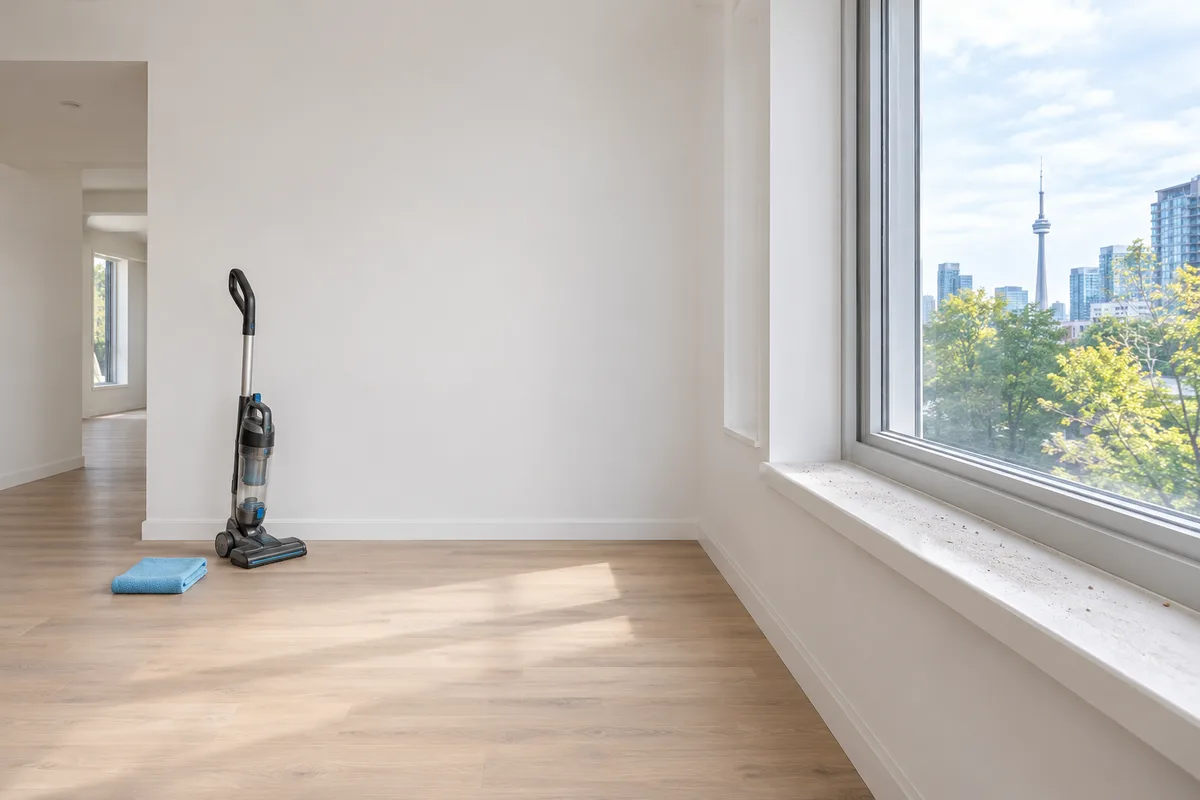
The few days between getting the keys and the moving truck are the easiest a home will ever be to clean. Nothing to move, nothing to work around. Dust falls, so work from the top of each room down and from the back of the home towards the door.
Start with the furnace filter
Do this first, before you run the heat for hours. The US Department of Energy's Building America guide on removing construction debris from ducts tells builders to keep ducts clean during construction and to replace the filter before anyone lives in the home. It also admits that covering vents doesn't stop the finest dust from getting into the equipment. Ask the builder whether the furnace ran during the finishing work. If it did, or nobody knows, assume the filter has been catching drywall dust for a while.
- Put in a new filter of the size printed on the old one's frame.
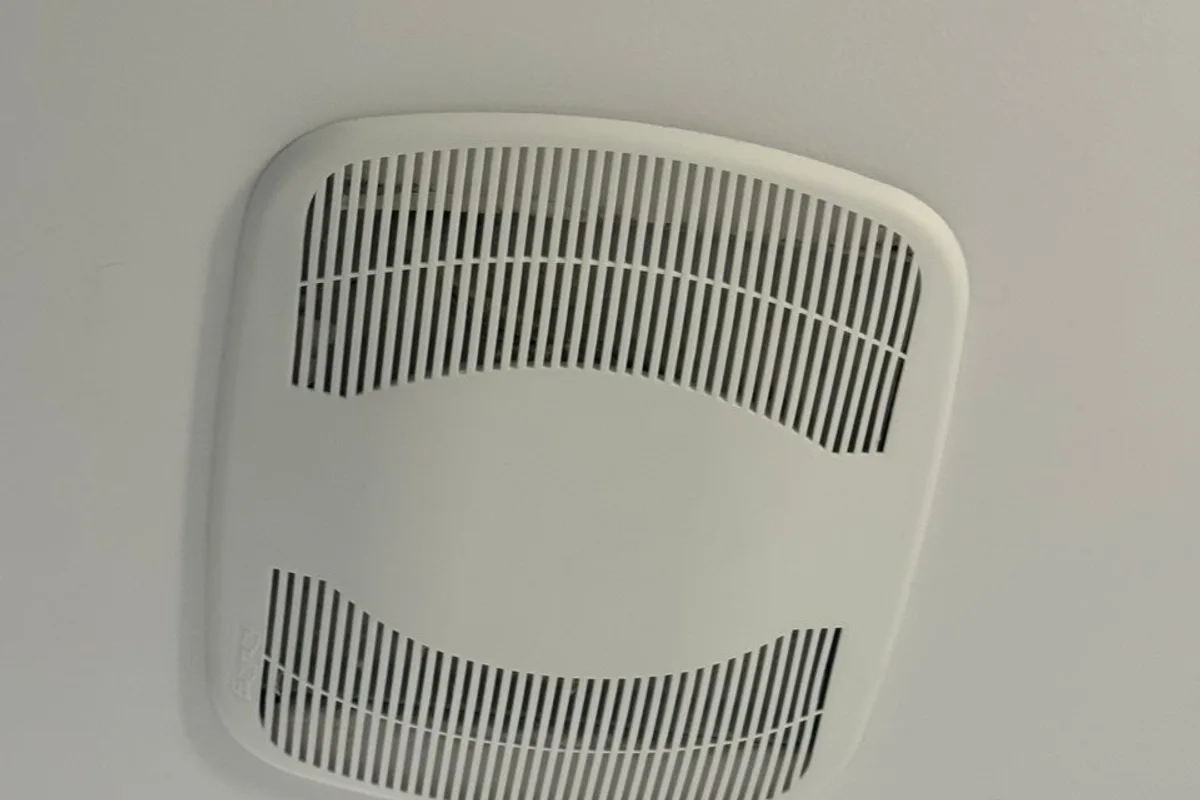
- Take the floor and wall grilles off and wash them in warm water with a little dish soap. The same guide says registers and grilles are wet-cleaned with a detergent-type cleaner. Our article on cleaning heating vents before winter goes through the soak and rinse.
- Vacuum only as far into the opening as the hose reaches. Cleaning the ducts themselves is a job the guide leaves to HVAC professionals.
Then go room by room
- Vacuum high: tops of door frames, closet shelves, light fixtures, the ledge over the kitchen cupboards. A vacuum lifts drywall dust. A dry cloth mostly pushes it into the air.
- Vacuum inside every cupboard and drawer, then wipe them with a damp microfibre cloth. Cupboards were open while the trades worked, and they're where your plates and toothbrushes are about to go.
- Wipe walls only where you see marks, with a barely damp cloth and light pressure. Rubbing hard leaves a shiny patch on flat paint.
- Wash counters, sinks, tubs and showers with warm water and mild dish soap. Rinse, then dry. Tap water in Vaughan is hard, as our article on cloudy shower glass shows, and drops left to dry leave spots.
- Do the window sills and tracks before the glass, so nothing drips onto clean panes.
- Floors last. Vacuum twice with a clean filter in the vacuum, then damp-mop with a well-wrung mop. Our guide to which floors can take a steam mop is worth reading before you plug one in on new hardwood or laminate.
New windows and their labels
Marvin, a window maker, says on its window care and maintenance page that labels and their glue should come off the glass as soon as possible after installation, and not while the glass is in direct sunlight. It also says not to use scrapers of any kind, and that glass scratched by a scraper isn't covered by its warranty. Soak the glass with clean water first to loosen dirt and grit, keep cleaners away from the rubber weatherstrip, and skip anything with a strong chemical base or a lot of alcohol. Your windows may come from another maker, so look for a care sheet or a note on the label itself before you start.
One safety note for the whole clean. New-home dust tempts people to reach for something stronger. Health Canada says it's never safe to mix bleach with other cleaning products, because bleach reacts with ammonia and with acids, vinegar included. Warm water and dish soap handle drywall dust on almost every new surface.
The first month: dust that keeps coming back
Don't be surprised when a white film settles again a week after you move in. Dust left inside the walls, the cupboards and the system keeps working its way out as the heat runs and doors open and close.
- Check the furnace filter again after a few weeks. If it's grey already, change it.
- Wipe the grilles on the supply vents once more.
- Dust the tops of door frames and the shelves in closets you haven't unpacked yet.
- Vacuum the bottom of the kitchen and bathroom cupboards before you fill them for good.
Keep your PDI photos and the signed form together with the home's paperwork. If a mark appears later, you'll want to compare.
A new home is a move-in clean in its simplest form: an empty space, cleaned top to bottom before your boxes arrive. If yours is in a new tower, our condo cleaning page covers what we do in a unit.