It depends on what spilled. Sugar, jam, syrup or melted plastic should come off while the glass is still hot, because they can leave a permanent pit if they cool in place. Anything else, like pasta water or soup, can wait: turn the burner off, move the pot, and clean it once the glass has cooled. Burnt-on marks that are already cold come off with a cooktop cream and a scraper made for this glass.
Sugar or plastic on hot glass: the first minute
This is the one job on a glass cooktop with a clock on it. These steps come from the glass cooktop cleaning page of GE Appliances.
- Turn off every element and lift the hot pan away.
- Put on an oven mitt. The glass stays hot after the red glow is gone.
- Take a new, sharp single-edge razor scraper and push the spill to a cool part of the cooktop. Don't try to lift it where it landed.
- Wipe it up with paper towels.
- Leave whatever is still stuck until the glass has cooled, then clean it off fully before you turn that element on again.
GE explains why it asks you to work on a hot surface:
Sugary spillovers (such as jellies, fudge, candy, syrups) or melted plastics can cause pitting of the surface of your cooktop (not covered by the warranty) unless the spill is removed while still hot.
Samsung Canada says much the same on its electric cooktop care page: melted sugar or chocolate needs attention right away, even with the cooktop still hot, and care around the heat. If you can't do this safely, because the spill is spreading toward you or there's no mitt nearby, keep your hands away and deal with it after it cools.
A pot that has glued itself down with sugar is a separate problem. LG's help page says to run the element for 1 to 2 minutes to melt the sugar, then separate the pot gently. Pulling it off by force can break or scratch the glass.
Everything else: warm, then cold
While it's warm
For a boil-over that isn't sugary, Samsung's advice is to take the pot off, turn the cooktop off and let it cool before you wipe. Whirlpool adds a useful window for scraping: on its ceramic glass cooktop page it says a scraper works best when the glass is warm but no longer hot to the touch, with an oven mitt on. So if dinner has just finished and a crust is sitting on the glass, that's the moment.
Once it's cold
Food that burned on days ago, or a ring that has built up over months, is the slower job. Check that every control is off first.
- Scrape any raised bits with a cooktop scraper held at about 45 degrees. It takes some pressure, and Samsung Canada says to always use a fresh blade so the glass doesn't get scratched.
- Put a few dime-sized drops of ceramic cooktop cleaner on the marks.
- Rub with a pad made for cooktops, pressing as hard as the stain needs.
- Let the cleaner dry to a white haze, as Whirlpool describes.
- Polish with a clean, dry cloth or paper towel. If there's still a shadow, go through the steps again.
GE adds one rule people miss: don't heat the cooktop until all the cream has been cleaned off. It also suggests keeping a little cream on the residue while you scrape.
Which mark is which
A cooktop that looks ruined often isn't. Most of these marks have a name on GE's page, and most of them come off.
| What you see | What it is | What to do |
|---|---|---|
| Metallic sheen in patches | Mineral deposits left by evaporated water and food | Cooktop cream. Samsung Canada also lists baking soda and vinegar for mineral marks |
| Grey or silver lines where pots get moved | Metal rubbed off the pan | Cream, a cleaning pad and, if needed, the scraper |
| Black stain after a pot boiled dry | The thin aluminum or copper layer on the pan's base | Clean it off before you heat that spot again, or it may stay |
| Printed speckles that have changed colour | Residue from soft copper or aluminum pans, caught on the rough pattern | Cream and the scraper |
| Brown crust around an element | Burnt food | The cold steps above |
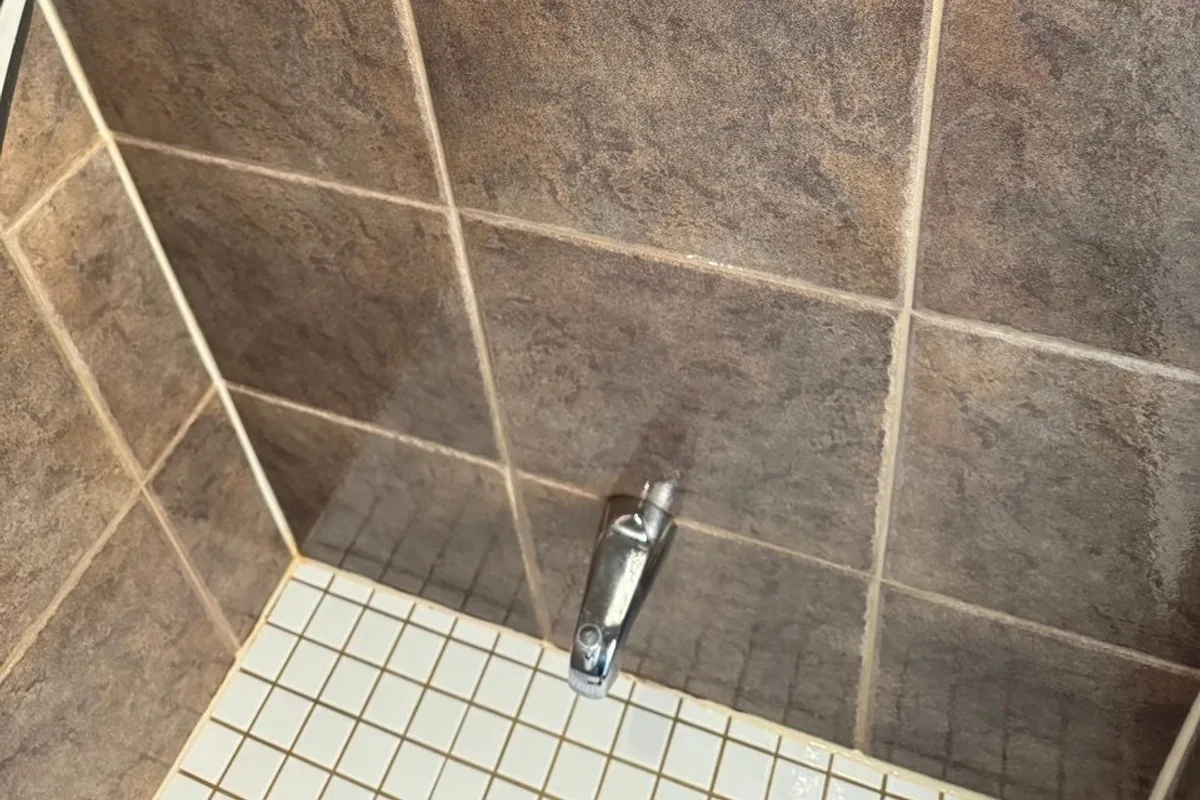
| Small dent or crater you can feel with a fingernail | Pitting | Stop rubbing. See the next section |
Where the makers don't agree
Search for this subject and you'll find one recipe everywhere: baking soda, vinegar, a hot towel. The makers are less united. Samsung Canada describes baking soda and vinegar under a wrung-out soapy towel for 15 minutes. LG says to use only an electric range cleaner or one certified by the German company Schott, with a glass cleaning sponge, and warns that a general kitchen detergent or a rough sponge may damage the surface. GE says that sponges or cleaners other than those it recommends can cause damage.
So the answer lives in your own manual. If you can't find it, look up your model number on the maker's site. Whirlpool's page is the plainest about what stays off the glass: steel wool, abrasive powder cleansers, chlorine bleach, rust remover and ammonia.
If bleach or an ammonia spray is in the cupboard anyway, keep it there, and never combine it with anything. Health Canada warns that bleach mixed with ammonia or an acid such as vinegar gives off toxic gas. The counter next to the range has its own rules, and our article on cleaners for quartz, granite and marble countertops goes through them product by product.
What no cleaning will fix
GE is direct about two cases. If the glass has a pit or an indent, the cooktop glass has to be replaced. And if plastic or porcelain from a kettle has melted on and hardened, it has usually fused to the glass and can't be removed. Plastic that hasn't hardened yet is worth one try with the hot-spill steps.
Rubbing harder won't help in either case. GE sends both to a service visit, so call the maker of your range.
Small habits that save the glass
- Lift pots rather than sliding them. That one change stops most of the grey lines.
- Run a finger over the bottom of your pans. GE warns that nicks and rough spots scratch the cooktop.
- Keep a scraper in a kitchen drawer with a mitt. You won't go looking for one while jam is boiling over.
- Keep plastic spoons, bags and packaging off the cooktop while it's cooling.
- If you're cleaning the cooktop anyway, the hood above is a good next job, and we've written up how to wash a range hood filter by type.
The stovetop is on the list of our deep cleaning, and the kitchen deep cleaning page shows what else that covers. When you ask for a quote, tell us the range is a glass top.