Most range hood filters come clean in a sink of hot water and dish soap: soak them, brush them gently, rinse, and let them dry completely before they go back in. Metal mesh filters can usually go in the dishwasher too. The exception is the charcoal filter in a hood that blows air back into the kitchen instead of outside. That one can't be washed at all, it gets replaced.
So before you fill the sink, take the filter down and look at what you're holding. The type decides everything else.
First, find out which filter you have
Switch the hood off and let the stove cool. Most filters slide out or drop down when you push a small tab on the front edge. Hold the filter with your other hand while you release it, because a greasy filter is slippery and the cooktop is right under it.
- A flat panel of layered metal mesh, usually aluminium, light and a bit flexible. This is the common one in apartment and condo hoods.
- Heavy stainless steel with angled slats you can't see through. That's a baffle filter, the kind used on professional style hoods.
- A black pad or a cartridge with granules in it, sometimes sitting behind the metal filter. That's a carbon (charcoal) filter, found in hoods that recirculate the air instead of venting it outside.
If you can't find a duct leaving the hood through the cabinet above or the wall behind it, look for a carbon filter even if the front one is metal.
What each filter needs
The care rules below come from the Broan-NuTone help page on cleaning range hood filters. Your own hood's manual comes first if it says something different.
| Filter | How to clean it | What to avoid |
|---|---|---|
| Aluminium mesh | Dishwasher about once a month with a non-phosphate detergent, or by hand in the sink with a mild detergent | Phosphate detergent and hard water can discolour it. It still works, but the warranty doesn't cover the colour |
| Stainless steel baffle | Soap and water whenever the surface starts to look dirty | Scouring pads that scratch the finish |
| Carbon or charcoal | Can't be cleaned or washed. Replace it with the part your hood takes | Soaking or rinsing it: it isn't made to be washed |
The sink method for mesh and baffle filters
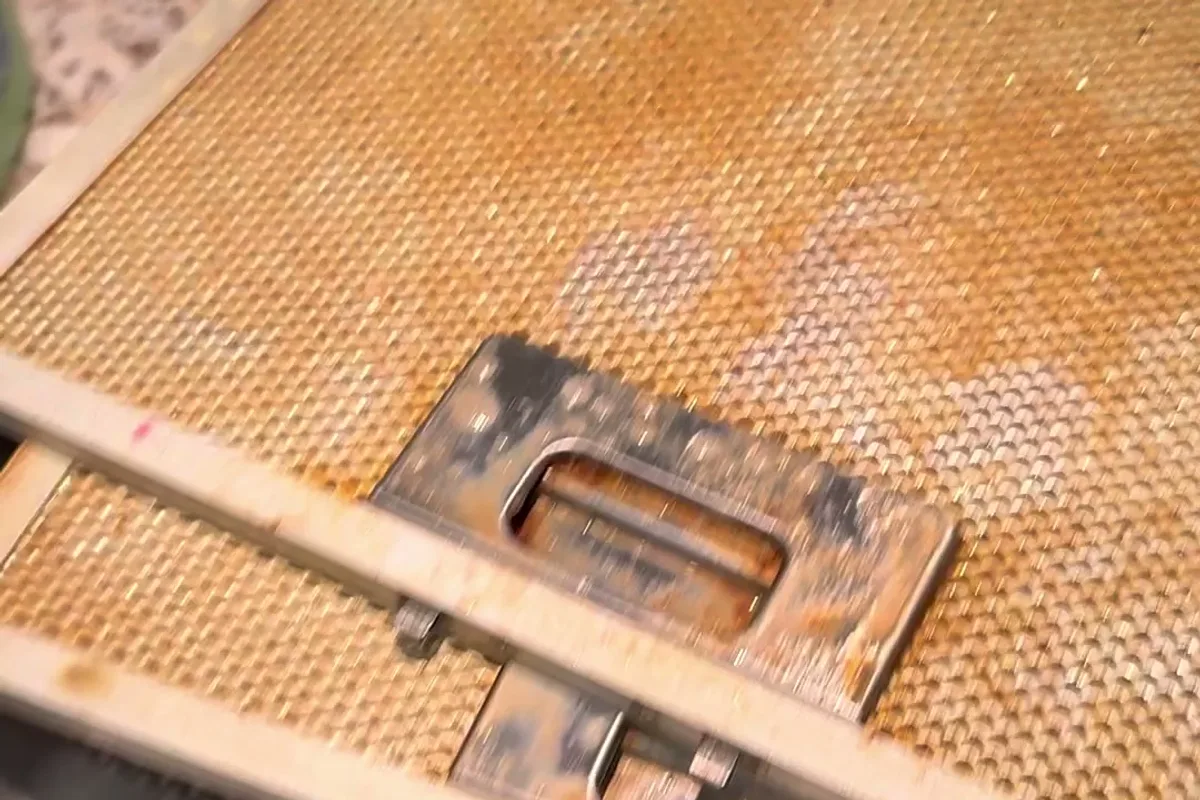
This is the version that works on a filter that hasn't been touched in a long time, the brown, sticky kind you can see on the deep cleaning page in the frames from one of our kitchen jobs.
- Put the plug in the sink and fill it with water as hot as the tap gives you. Add a good squeeze of grease-cutting dish soap and swish it around.
- Lay the filter flat so it's fully under water. If it doesn't fit, soak one half, then turn it around.
- Leave it for 15 minutes or so. The grease softens while you wipe down the hood itself.
- Brush both sides with a soft dish brush, working along the mesh rather than across it so the layers don't bend. An old toothbrush gets into the corners of the frame.
- If brown film is still there, drain the sink and do a second soak in fresh hot water. A second soak does more than scrubbing harder.
- Rinse under hot running water until no suds come out of the mesh.
- Shake it, pat it with a towel and stand it on its edge to dry. Water left inside the layers drips onto the stove later, so wait until it's fully dry before it goes back up.
For the dishwasher, put the filter on the bottom rack where the spray arm can still turn. Tall filters sometimes block it, and then nothing gets clean.
Why oven cleaner stays away from aluminium
When soap isn't enough, people often reach for oven cleaner. Many oven cleaners are based on sodium hydroxide (lye), and that's exactly the wrong thing for an aluminium mesh filter. The NIOSH Pocket Guide entry for sodium hydroxide lists what it reacts with:
Water; acids; flammable liquids; organic halogens; metals such as aluminum, tin & zinc; nitromethane [Note: Corrosive to metals.]
On a thin aluminium filter that means corrosion: the metal darkens and the mesh weakens a little more with every cleaning. The same list is also why an oven cleaner should never be mixed with anything else, and certainly not with an acid such as vinegar. If you use one inside your oven, follow its label, keep it off the hood filter, and rinse the sink before a filter goes into it.
How often to wash it
Broan's page says about once a month for aluminium mesh, and more often if you fry a lot or cook with a wok. That's a good rule if you cook dinner most nights. Someone who mostly reheats food can go longer.
A quicker test than any calendar: run a finger along the underside of the filter. If it comes back tacky, it's time. Other signs are a fan that sounds louder than it used to, cooking smells that hang around after dinner, and drops of grease on the stovetop that you didn't spill. A carbon filter has no such test you can do by touch, so go by the replacement interval in your hood's manual.
Grease, fire and the stove under it
A filter full of grease sits right above the burners. Toronto Fire Services calls unattended cooking the leading cause of residential fires, injuries and deaths in the city, and says cooking accounted for 23 per cent of residential fires in Toronto in 2022. A clean filter doesn't replace staying in the kitchen while you cook, but it means less fuel above the pan.
If grease in a pan does catch fire, the same page says to smother the flames by sliding a lid or a baking sheet over the pan and to turn off the burner. Never pour water on it.
The hood body and the fan area
While the filter soaks, wipe the inside of the hood with a cloth dipped in the same hot soapy water, then go over it with a damp cloth and dry it. Stainless steel looks best when you wipe along the grain. Leave the motor and wiring alone, and don't spray liquid up into the opening where the fan sits.
The range hood is also one of the spots in an empty rental that gets checked on moving day, which is why it's a line in our article on move-out cleaning in Ontario. If you'd rather hand over the whole kitchen, the hood filter, grates and oven are all part of a deep clean, and you can see real results on our before and after page or send us your details through the contact form.